

From a Teenager in the Bronx to an Amazing Science Communicator: How Carl Sagan Changed Neil deGrasse Tyson's Life — and Countless Others
On a snowy December day in 1975, Carl Sagan personally invited a 17-year-old aspiring astronomer to Cornell. That afternoon shaped Neil deGrasse Tyson's life — and sparked a chain reaction of science inspiration.
ScienceGNGV Editorial Team6 min read
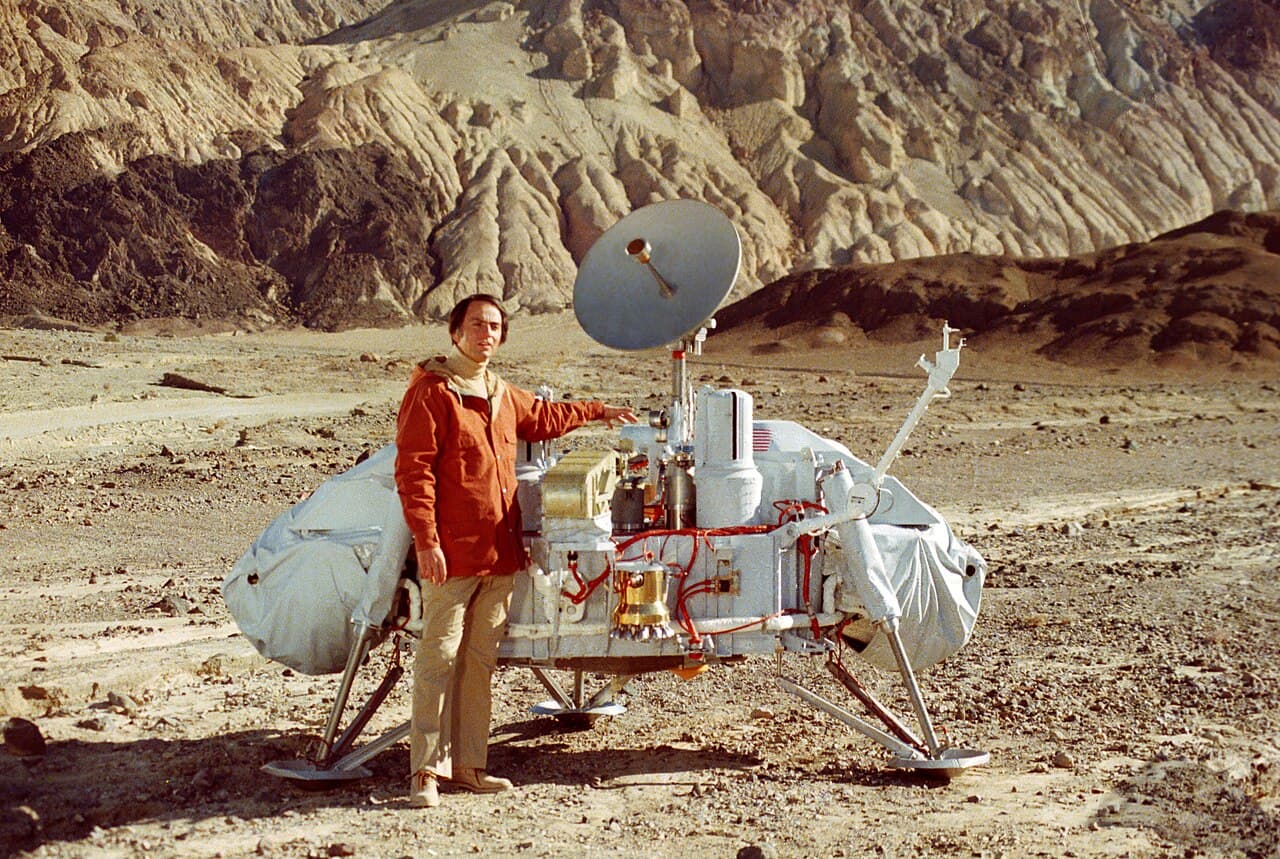
On December 20, 1975, a seventeen-year-old boy from the Bronx, New York, stepped off a bus into the snow-covered town of Ithaca. He had been invited by a scientist who, upon receiving his college application at Cornell University, had done something unusual: he wrote a personal letter to that young man, fascinated by the stars.
The scientist was Carl Sagan. The teenager was Neil deGrasse Tyson.
Sagan picked up Tyson at the bus stop, gave him a tour of his laboratory, walked him around campus, and signed one of his books with the dedication: "For Neil, a future astronomer." When the snow became too heavy for the return trip, Sagan offered his personal phone number: "If the bus can't leave, call my house. You can spend the night with us."
Tyson didn't stay at Cornell — he chose Harvard. But that encounter planted something far greater than a college enrollment. In his own words: "I already knew I wanted to become a scientist. But that afternoon, I learned from Carl the kind of person I wanted to become."
The Domino Effect That Never Stopped
Today, Tyson is director of the Hayden Planetarium, hosted Cosmos: A Spacetime Odyssey (2014) — the direct successor to Sagan's 1980 series — and is well-known as an amazing science communicator. But the most revealing aspect is what he does behind the scenes: he personally responds to every letter and email from young people asking about careers in astronomy.
"I have this duty," says Tyson. "To respond to students who are inquiring about the universe as a career path — in the way that Carl Sagan had responded to me."
A Lesson That Transcends Generations
Sagan used to say: "Every kid starts out as a natural-born scientist, and then we beat it out of them." His conviction was that the educator's role is not to answer questions — it is to protect the ability to ask them.
Tyson's story proves that a single act of intellectual generosity — a letter, an afternoon, a signed book — can trigger a chain reaction that inspires countless others.
In a world that often treats curiosity as a distraction, Sagan's message remains revolutionary: the unknown is not something to fear. It is the most beautiful invitation the universe offers us.


