
Death Valley Experiences Its Best Superbloom in a Decade as Desert Erupts in Color
Death Valley National Park — the hottest and driest place in North America — is experiencing its best wildflower superbloom since 2016, triggered by above-average rainfall that woke dormant seeds across the desert landscape.
EnvironmentGNGV Editorial Team4 min read
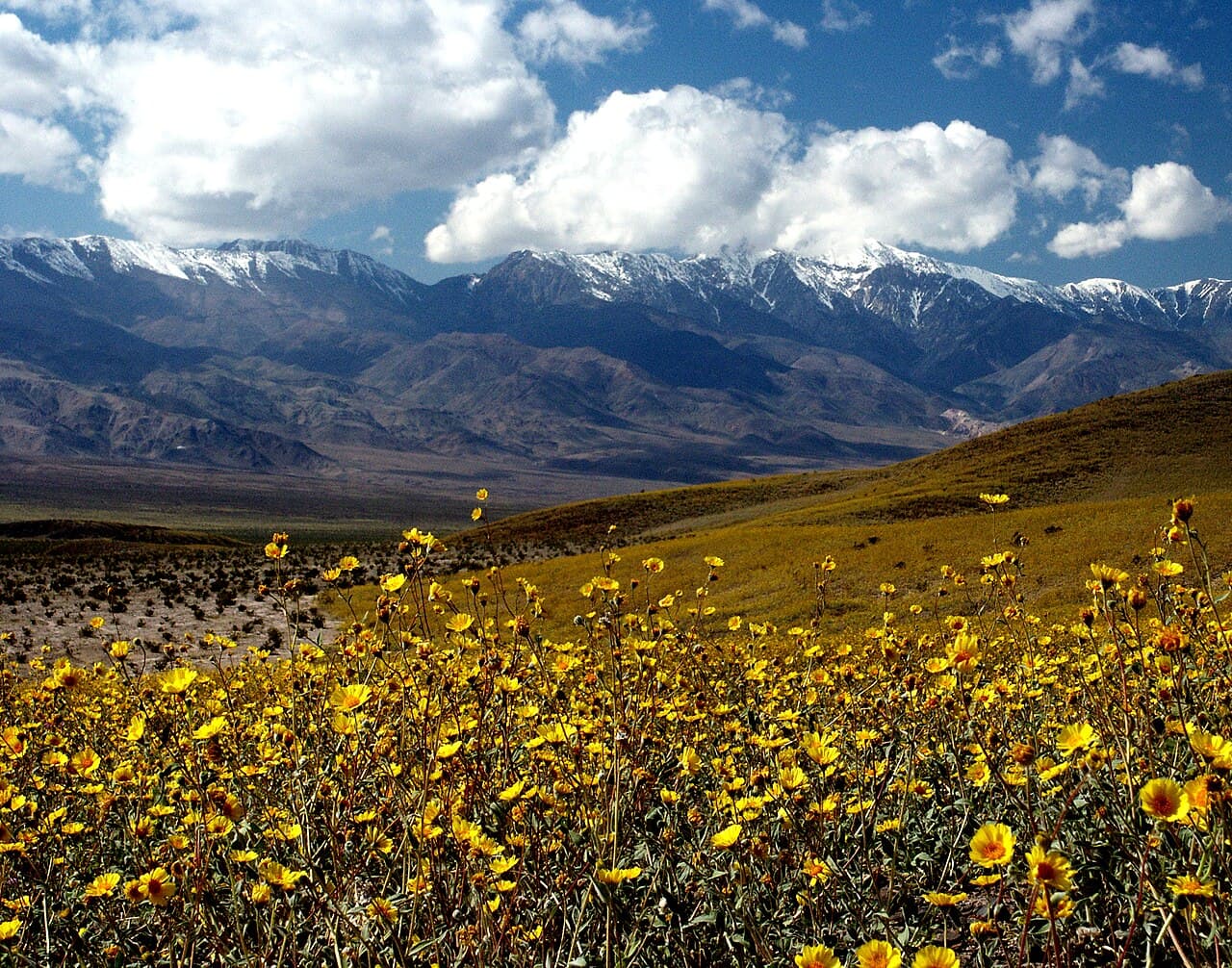
Death Valley National Park, the hottest and driest place in North America, is experiencing a rare and spectacular superbloom — the best display of spring wildflowers the park has seen since 2016. The desert floor has transformed into a vibrant carpet of magenta, yellow, and white flowers, drawing visitors and nature enthusiasts from around the world to witness this once-in-a-decade phenomenon.
The superbloom was triggered by an unusual amount of rainfall between November 2025 and January 2026. The park received approximately 2.5 inches of rain during this period — more than a typical year's worth of precipitation (2 inches) in just three months. This extra moisture woke dormant seeds that had been waiting in the desert soil, some for years or even decades, for exactly the right conditions to germinate.
The predominant flowers painting the landscape are Phacelia, with its striking magenta blooms, and Desert Gold, which creates sweeping fields of yellow across the valley floor. Visitors have also spotted Mojave Stars, Brown-eyed Primrose, Five Spot, Sand Verbena, Brittlebush, and the uniquely named Gravel Ghost among the dozens of species participating in this botanical spectacle.
Superblooms in Death Valley are exceptionally rare events, occurring roughly once per decade when conditions align perfectly. Previous notable superblooms occurred in 2016, 2005, and 1998. The phenomenon requires not just sufficient rainfall, but precipitation at the right time of year, followed by mild temperatures and the absence of drying winds that could halt germination.
The superbloom is more than just a visual marvel — it triggers a cascade of ecological activity across the desert. Insects emerge to pollinate the flowers, birds and small mammals find abundant food sources, and the entire ecosystem briefly comes alive with an intensity not seen during normal years. Scientists study these events to understand desert ecology and how plants have evolved to survive extreme conditions.
While the low-elevation flowers have begun to fade by late March, the bloom is expected to progress to higher elevations through April and June, offering continued opportunities for visitors. Park officials have noted record visitation during the superbloom weeks, underscoring the deep human connection to natural beauty even in the most extreme landscapes on Earth.