
Antimatter Transported by Road for the First Time in Historic CERN Experiment
Scientists at CERN have successfully transported 92 antiprotons by truck across the laboratory's site in Geneva, marking the first time antimatter has ever been moved. The breakthrough opens new possibilities for ultra-precise physics measurements.
ScienceGNGV Editorial Team5 min readLast reviewed September 28, 2026
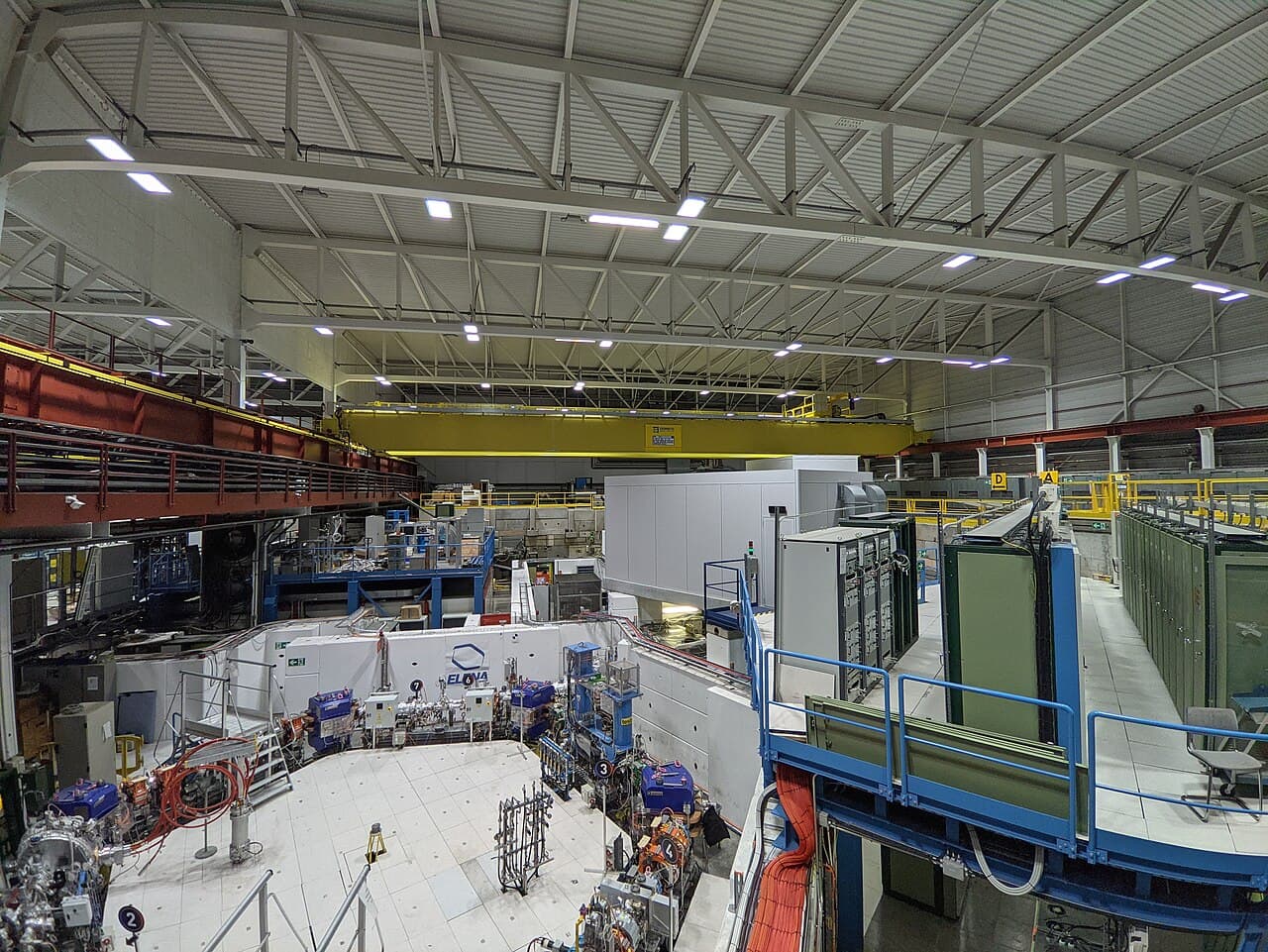
On March 24, 2026, a team of scientists from the BASE experiment at CERN achieved what was once thought impossible: they transported antimatter particles by road. A specially designed cryogenic Penning trap carrying 92 antiprotons was loaded onto a truck and driven across the laboratory's main site in Geneva, Switzerland, completing a 30-minute journey without losing a single particle.
Antimatter is the mirror image of ordinary matter. When the two meet, they annihilate each other, converting entirely into energy. This fundamental property makes storing and transporting antimatter extraordinarily challenging, requiring powerful magnetic fields to keep particles suspended in a vacuum, completely isolated from any normal matter.
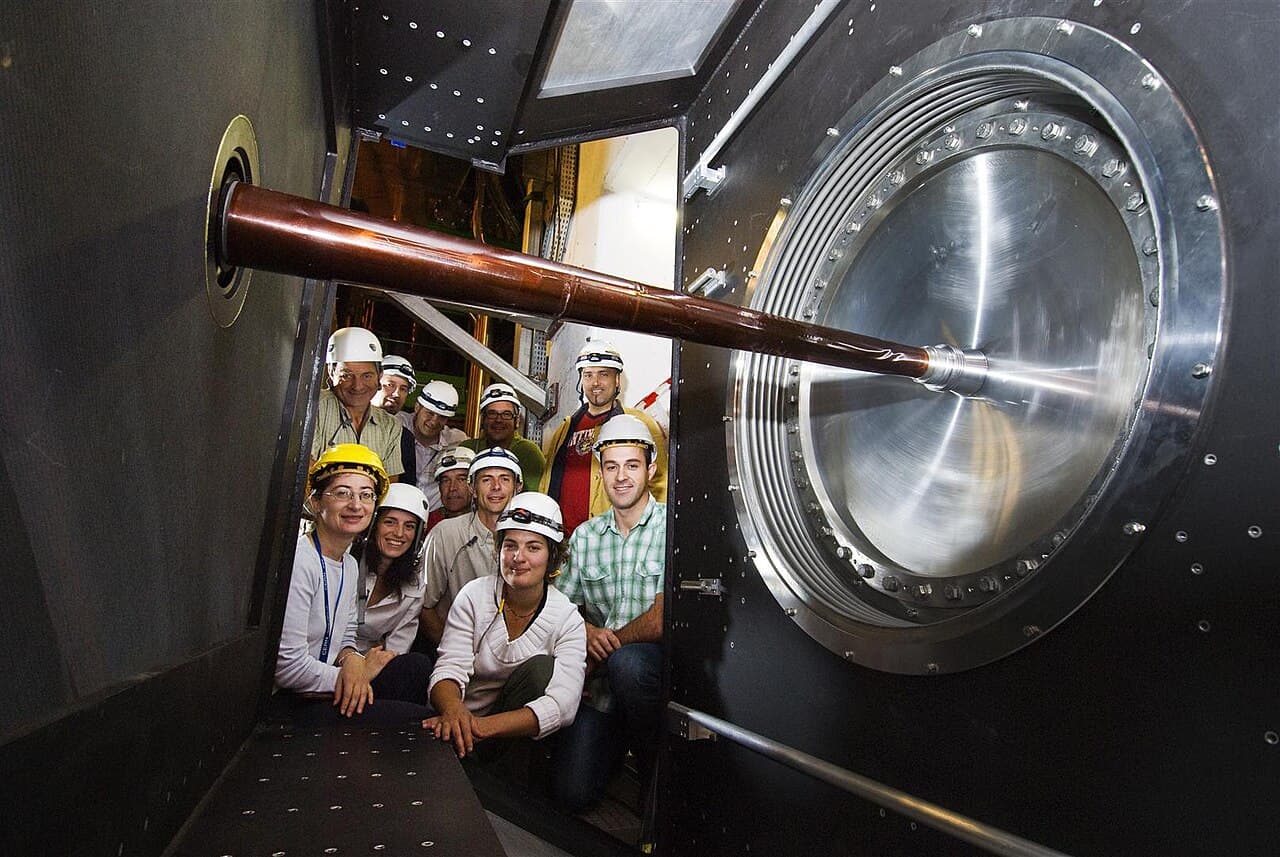
The team accumulated a cloud of 92 antiprotons in an innovative portable cryogenic Penning trap, then disconnected it from the experimental facility, loaded it onto the truck, and continued experiment operation after transport. The trap uses superconducting magnets cooled to near absolute zero to confine the antiparticles in a perfect vacuum.
The ultimate goal of this research is to transport antiprotons to other European laboratories, such as Heinrich Heine University Düsseldorf, where very-high-precision measurements of antiproton properties could be performed in environments free of experimental noise. At CERN's antimatter factory where antiprotons are created, background vibrations and electromagnetic interference limit measurement precision.
This achievement represents a paradigm shift in antimatter research. Until now, experiments with antimatter could only be conducted at the few facilities in the world capable of producing it. By demonstrating that antiprotons can be safely transported, scientists have opened the door to a distributed network of antimatter experiments across Europe and potentially beyond.
The successful transport has been met with widespread enthusiasm in the physics community, as it signals the beginning of a new era in fundamental physics research. Future experiments enabled by mobile antimatter could test fundamental symmetries of nature with unprecedented precision, potentially revealing new physics beyond the Standard Model.