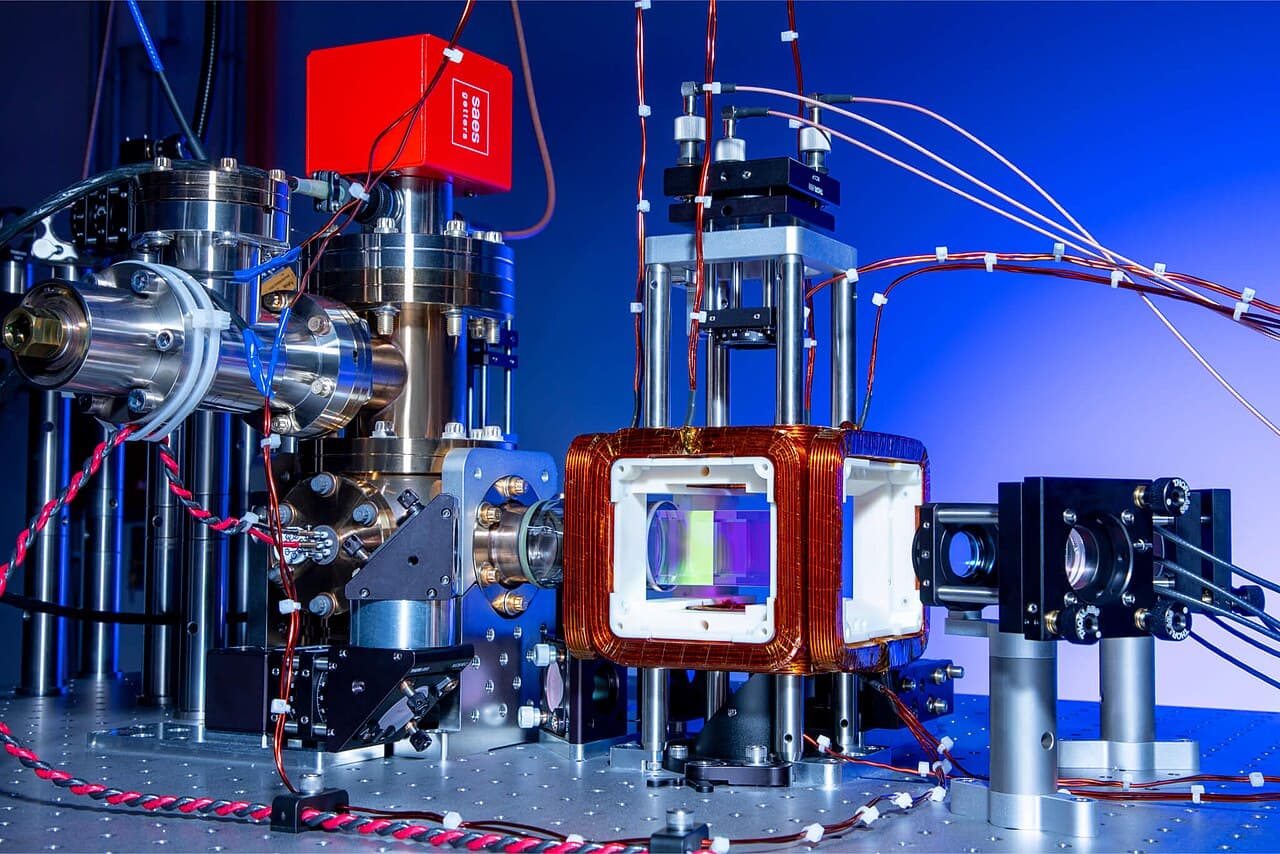

MIT Physicists Build Terahertz Microscope That Reveals Hidden Quantum Motions in Superconductors
MIT physicists have built a powerful new microscope that uses terahertz light to uncover hidden quantum motions inside superconductors, opening new pathways for understanding and developing room-temperature superconducting materials.
ScienceGNGV Editorial Team5 min read

MIT physicists have developed a groundbreaking microscope that uses terahertz light — electromagnetic radiation sitting between microwave and infrared frequencies — to peer inside superconducting materials and observe quantum motions that were previously invisible to scientists.
Superconductors are materials that conduct electricity with zero resistance when cooled below a critical temperature. Understanding the quantum mechanics behind this extraordinary property has been one of physics' greatest challenges, particularly for high-temperature superconductors whose behaviour defies conventional theory.
The new terahertz microscope operates at frequencies between 0.1 and 10 trillion cycles per second, a range that perfectly matches the energy scales of the quantum excitations responsible for superconductivity. Previous microscopy techniques either operated at frequencies too high or too low to capture these critical dynamics.
By scanning terahertz pulses across a superconductor's surface, the team can map how Cooper pairs — the paired electrons responsible for superconductivity — form, move, and interact at the nanoscale. The resulting images reveal intricate patterns of quantum behaviour that had only been theorized but never directly observed.
The implications extend well beyond fundamental physics. One of the grand challenges in materials science is creating a superconductor that works at room temperature, which would revolutionize everything from energy transmission to computing. By revealing exactly how superconductivity emerges at the quantum level, this microscope provides crucial guidance for designing new materials.
The team has already used the instrument to study several families of high-temperature superconductors, uncovering unexpected quantum fluctuations that may help explain why certain materials superconduct at higher temperatures than others. They plan to make the technique available to researchers worldwide.