
James Webb Telescope Confirms Water Vapor in Atmosphere of Rocky TRAPPIST-1 Planet
NASA's James Webb Space Telescope has detected water vapor in the atmosphere of TRAPPIST-1e, marking the first confirmed detection of water on a rocky planet in a star's habitable zone outside our solar system.
ScienceGNGV Editorial Team5 min read
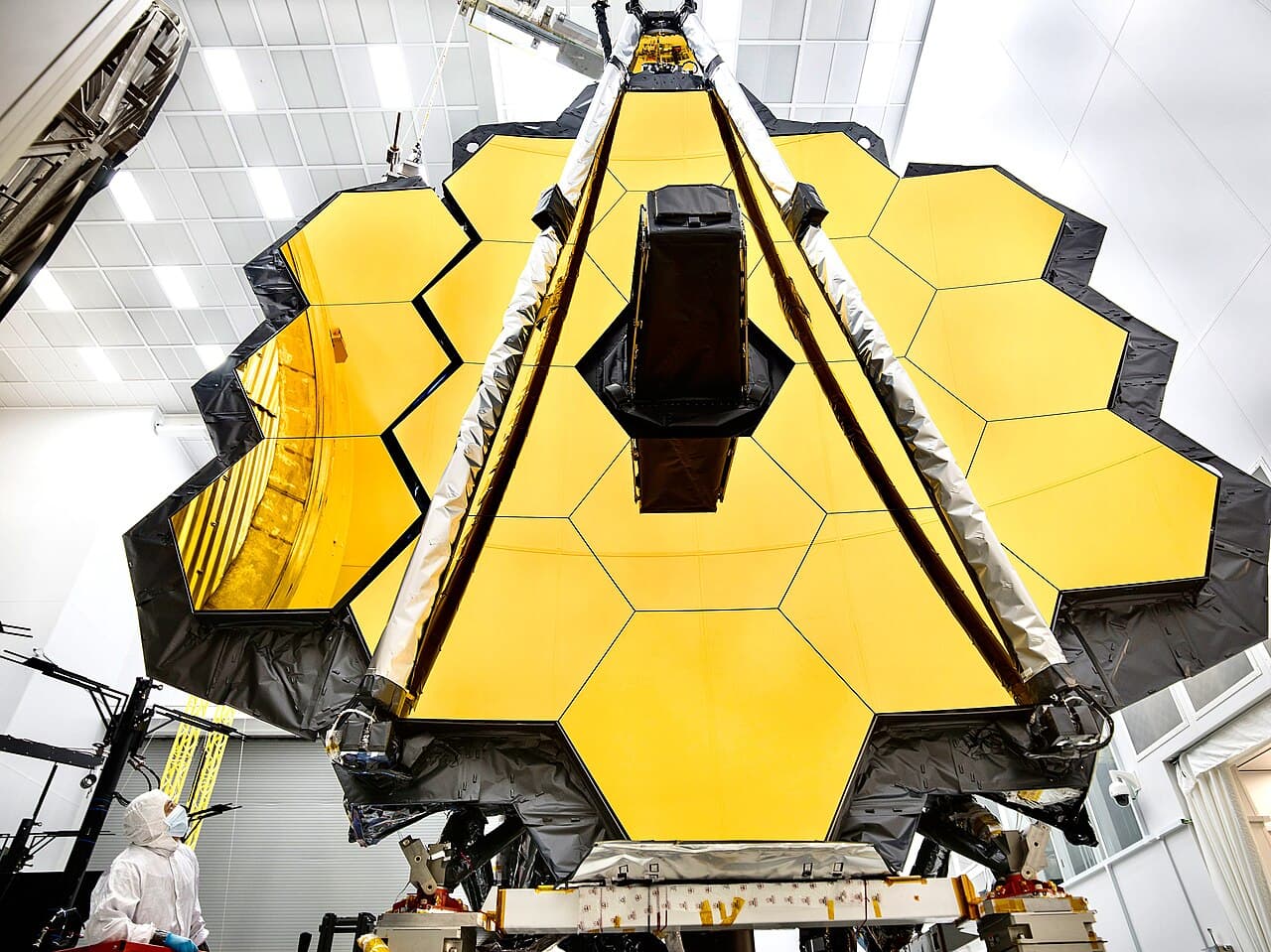
NASA's James Webb Space Telescope has made what scientists are calling one of the most significant discoveries in the search for life beyond Earth: confirmed water vapor in the atmosphere of TRAPPIST-1e, a rocky planet orbiting within its star's habitable zone roughly 40 light-years from Earth.
The detection was made using Webb's Near-Infrared Spectrograph instrument over the course of five separate transit observations, during which the planet passed in front of its host star. By analyzing how starlight filtered through TRAPPIST-1e's atmosphere, the team identified unmistakable spectral signatures of water vapor.
What makes this discovery extraordinary is the combination of factors. TRAPPIST-1e is roughly Earth-sized, orbits in the zone where liquid water could exist on the surface, and now has confirmed atmospheric water. While the presence of water vapor alone doesn't guarantee surface oceans or life, it dramatically narrows the search space for habitable worlds.
The research team, led by Dr. Olivia Lim at the University of Montreal, was careful to distinguish their finding from previous tentative detections. They confirmed the signal was consistent across all five observations and ruled out potential contamination from the host star's own atmosphere, a technical challenge that had plagued earlier studies.
The atmosphere also showed hints of carbon dioxide, suggesting active geological processes that could help maintain a stable climate. The absence of certain industrial chemicals in the spectral data confirms the signal comes from natural atmospheric processes rather than instrumental artifacts.
Follow-up observations scheduled for later this year will attempt to measure the water vapor concentration more precisely and search for additional biosignature gases such as methane and ozone, which in combination could provide stronger evidence for biological activity.