
Le télescope James Webb confirme la présence de vapeur d’eau dans l’atmosphère d’une planète rocheuse de TRAPPIST-1
Le télescope spatial James Webb de la NASA a détecté de la vapeur d’eau dans l’atmosphère de TRAPPIST-1e : c’est la première détection confirmée d’eau sur une planète rocheuse située dans la zone habitable d’une étoile, hors de notre système solaire.
ScienceÉquipe éditoriale GNGV5 min de lecture
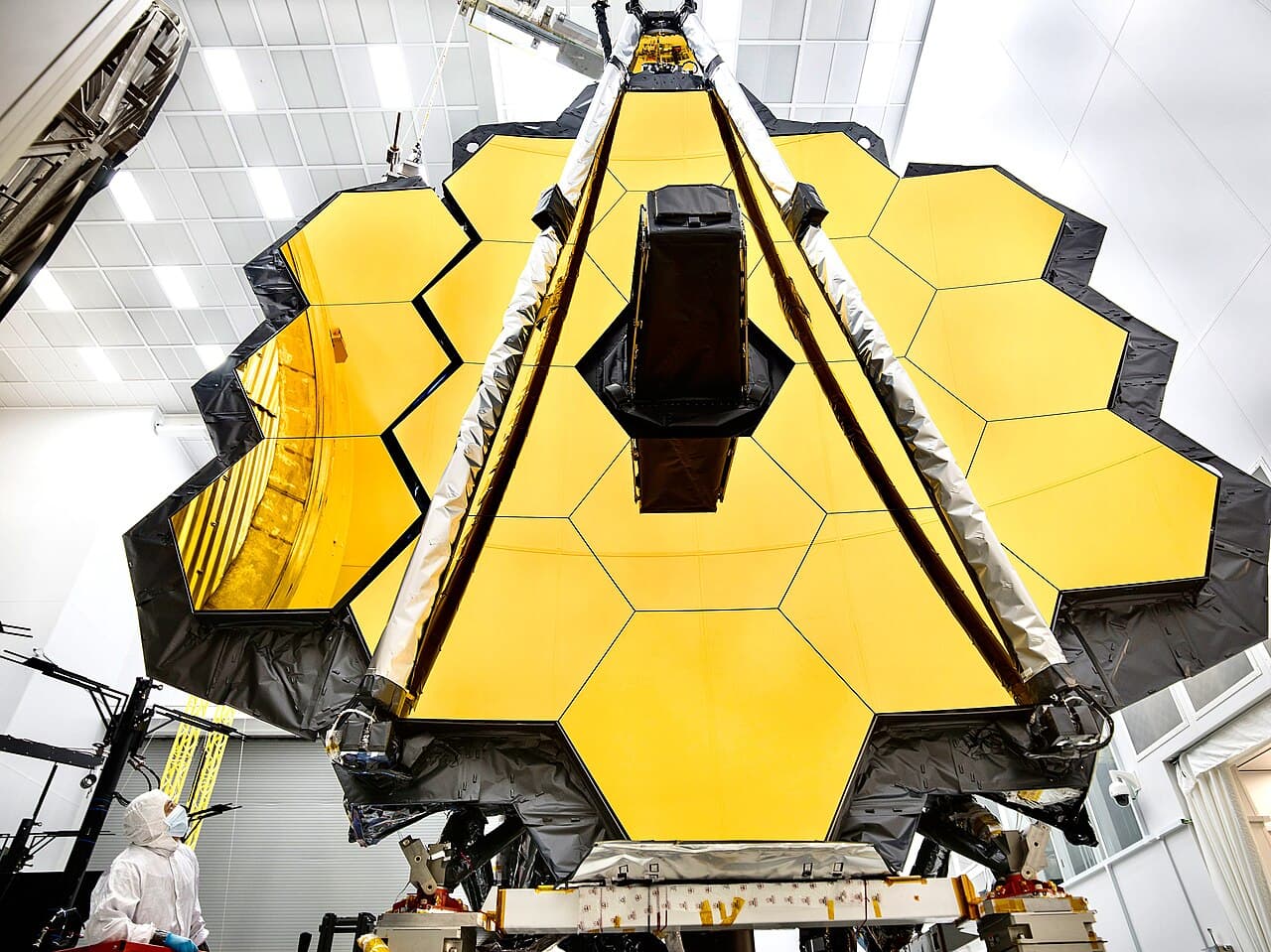
Le télescope spatial James Webb de la NASA a réalisé ce que les scientifiques qualifient de l’une des découvertes les plus importantes de la recherche de la vie au-delà de la Terre : la présence confirmée de vapeur d’eau dans l’atmosphère de TRAPPIST-1e, une planète rocheuse en orbite dans la zone habitable de son étoile, à environ 40 années-lumière de la Terre.
La détection a été réalisée à l’aide du spectrographe proche infrarouge de Webb, au fil de cinq observations de transit distinctes, au cours desquelles la planète est passée devant son étoile hôte. En analysant la manière dont la lumière de l’étoile était filtrée par l’atmosphère de TRAPPIST-1e, l’équipe a identifié des signatures spectrales indéniables de vapeur d’eau.
Ce qui rend cette découverte extraordinaire, c’est la combinaison des facteurs. TRAPPIST-1e a à peu près la taille de la Terre, orbite dans la zone où de l’eau liquide pourrait exister en surface et possède désormais une eau atmosphérique confirmée. Si la présence de vapeur d’eau ne garantit pas à elle seule l’existence d’océans en surface ou de vie, elle réduit considérablement le champ de recherche des mondes habitables.
L’équipe de recherche, dirigée par Olivia Lim, de l’Université de Montréal, a pris soin de distinguer son résultat de précédentes détections provisoires. Elle a confirmé que le signal était cohérent sur les cinq observations et a écarté une éventuelle contamination par l’atmosphère de l’étoile hôte elle-même, une difficulté technique qui avait entravé les études antérieures.
L’atmosphère a également montré des traces de dioxyde de carbone, ce qui suggère des processus géologiques actifs susceptibles de contribuer au maintien d’un climat stable. L’absence de certains produits chimiques industriels dans les données spectrales confirme que le signal provient de processus atmosphériques naturels plutôt que d’artefacts instrumentaux.
Des observations de suivi prévues plus tard cette année tenteront de mesurer plus précisément la concentration de vapeur d’eau et de rechercher d’autres gaz biosignatures, comme le méthane et l’ozone, qui, combinés, pourraient fournir des indices plus solides d’une activité biologique.