
Plant-Inspired Filters Start Catching Microplastics at Atlantic City’s Wastewater Plant
The Atlantic County Utilities Authority in New Jersey has installed a microplastic-capturing system designed by Princeton alumni at startup PolyGone Systems. The devices mimic water-repellent wetland plants and removed more than 98% of microplastics in lab tests; full-scale performance data is still to come.
InnovationGNGV Editorial Team3 min readLast reviewed November 9, 2026
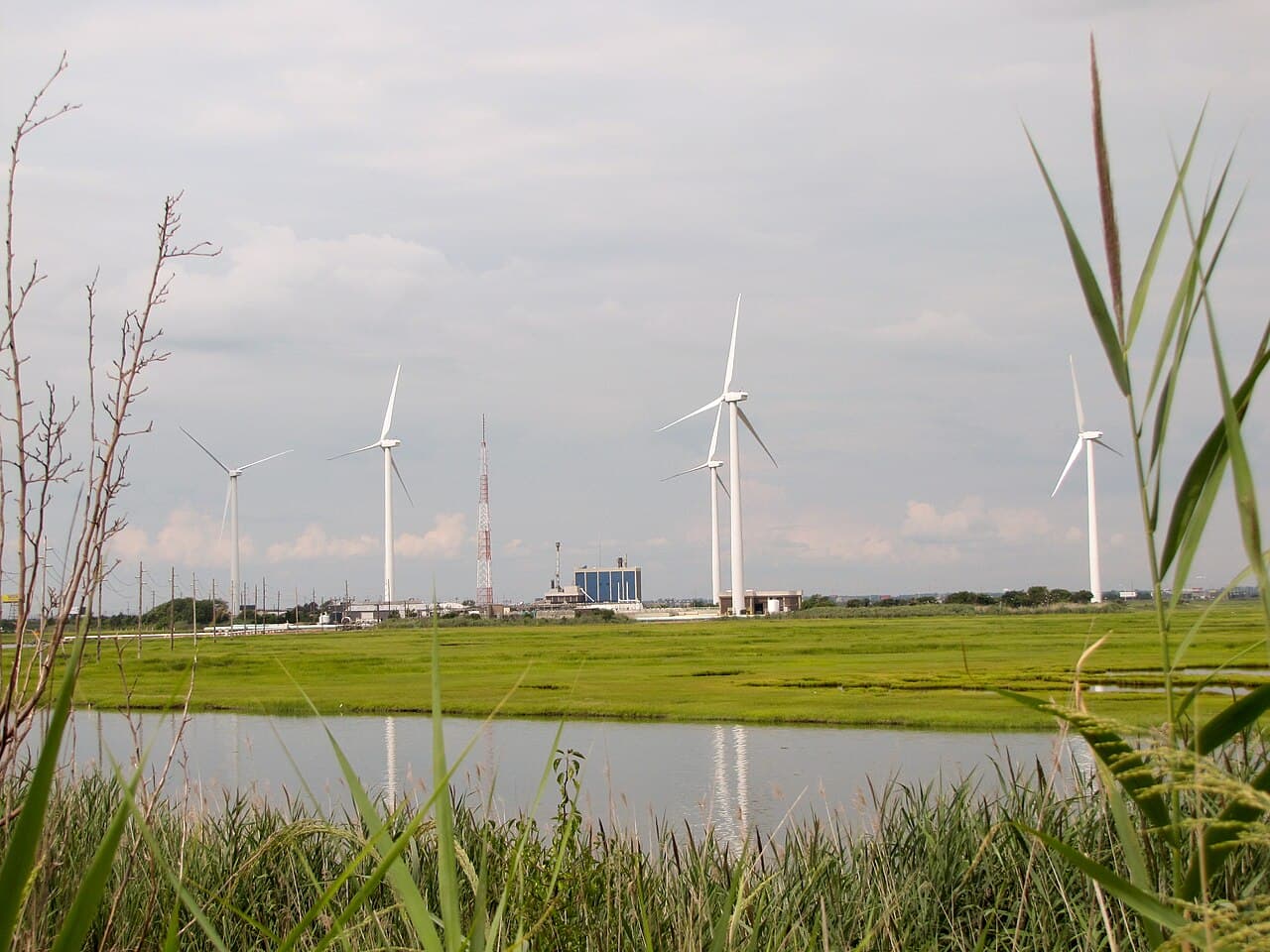
Every day, tiny fragments of plastic from washing machines, tyres and stormwater flow into wastewater treatment plants that were never designed to catch them. In Atlantic City, New Jersey, that is starting to change. WHYY reported in late October 2026 that the Atlantic County Utilities Authority (ACUA) has installed a system at its Atlantic City treatment plant that pulls microplastics out of wastewater before it is discharged to the ocean.
The technology comes from PolyGone Systems, a startup founded by former Princeton University graduate students Nathanial Banks and Yidian Liu. Their devices, which Liu calls “Polypods,” mimic wetland plants whose surfaces are extremely water-repellent. Microplastics readily cling to those surfaces, so the particles can be captured while the treated water flows on. The company says the approach uses very little material and energy. “I think this really marks a new era for treatment innovation,” said Banks, the company’s CEO, describing large, scalable systems that can treat very challenging contaminants. Liu, the chief operating officer, said she and Banks want to “resolve very complex problems with very simple but sleek-looking designs,” a principle she links to their architecture background.
For the utility, the motivation is simple. “We’re discharging to the ocean,” said ACUA president Matt DeNafo, explaining that plastic not removed at the plant goes back into the environment, reaching the fish people eat and the water they swim in. The ACUA says the installation, which follows a two-year pilot, is fully funded by a federal grant and is the first of its kind in the world. PolyGone has also launched a similar system at a wastewater plant in California, and the founders are interested in scaling the idea down for homes.
The results so far need careful reading. The system removed more than 98% of microplastics in a controlled laboratory setting and works best on the smallest particles, but there is no data yet from the commercial installation. No state or federal rule currently requires microplastic removal from wastewater, and scientists are still studying how microplastics affect human health. Even so, a working plant-scale filter is a concrete step toward keeping plastic out of the sea.
Why it matters
Most treatment plants cannot catch microplastics, so a low-energy system that works at plant scale could become a practical way to keep them out of rivers and oceans.
Sources
What you can do
Read the full report at WHYY, and cut microfibre shedding at home by washing synthetic clothes less often, on cooler and fuller loads.