
Brooklyn Pilot Shows How New York City Can Switch to Electric School Buses Without Straining the Grid
School bus operator First Student and utility Con Edison have completed the first phase of a $9 million pilot in East New York, Brooklyn, where 10 electric school buses now run, 40 more are due by June and chargers are already able to send power back to the grid.
InnovationGNGV Editorial Team3 min readLast reviewed November 9, 2026
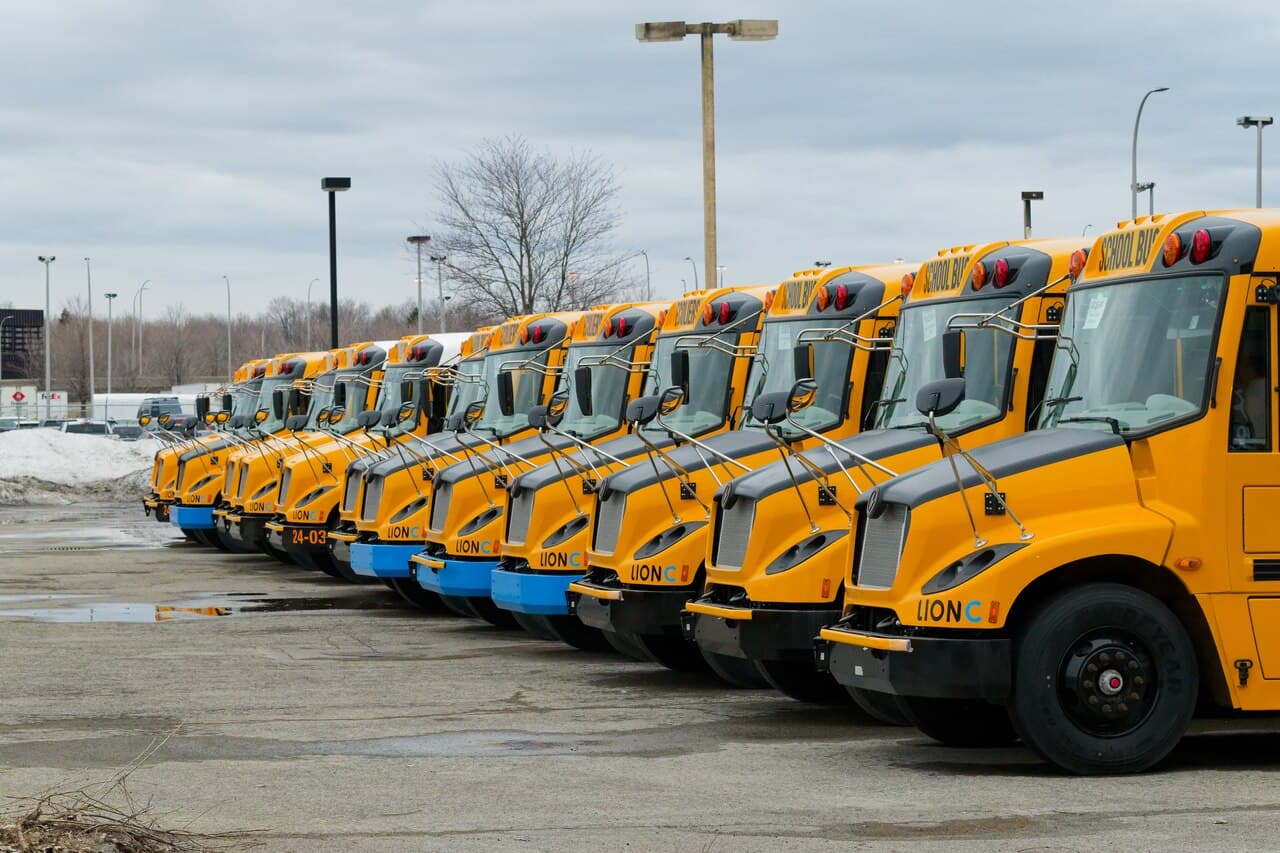
New York City runs thousands of diesel school buses, and replacing them with electric models raises an obvious question: can the grid cope? A pilot in East New York, Brooklyn, is starting to provide answers. As Canary Media reported, school bus operator First Student and utility Con Edison have completed the first phase of a $9 million project designed to test how the city can electrify its school bus fleet without overloading the electricity system.
At the East New York depot, 10 electric school buses are already in service, with 40 more scheduled for delivery by June. The site posed an unusual challenge: a jet-fuel pipeline runs beneath it, so the chargers were installed aboveground instead of in trenches. That “trenchless” system cost about $945,000 and went in over four weeks, and First Student estimates it saved nearly 20% in costs and about a month of schedule. Capacity can be expanded simply by adding modules. Two of the buses also carry 3-kilowatt rooftop solar arrays that can top up their own batteries and the depot’s battery unit, and the company is considering more solar-equipped buses, a 500-kilowatt rooftop solar system and a 2-megawatt battery at the site.
The pilot’s second phase, now underway, includes vehicle-to-grid demonstrations. The chargers already have the hardware and software needed to send power back to Con Edison’s system, and First Student aims for up to 10 megawatts of vehicle-to-grid and facility-to-grid capability over the next couple of years. “That will help make the grid more resilient,” said Vicki Kuo, Con Edison’s senior vice president of customer energy solutions. Kevin Matthews, First Student’s head of electrification, said the goal is that “every student in [NYC] can eventually enjoy an emissions-free ride.” The state energy agency NYSERDA provided about $2 million toward six new buses and the conversion of four diesel buses to battery power.
The transition still faces hurdles. Electric buses cost more upfront than diesel ones, and New York lawmakers recently pushed back the state’s deadlines by five years, to 2032 for all new school bus purchases to be zero-emission and 2040 for full compliance. Con Edison expects electric buses, trucks and other commercial vehicles to add more than 100 megawatts of demand by 2030. Nationally, more than 8,500 electric school buses were operating as of June 2026, up 66% in a year according to the World Resources Institute.
Why it matters
Electric school buses cut diesel exhaust where children breathe it most, and showing that depots can charge them without overloading the grid removes a major barrier for cities.
Sources
What you can do
Read the full story at Canary Media, and ask your school district or local transport board about its plans for cleaner school buses.