
Artemis II Launches First Crewed Moon Mission in More Than 50 Years
NASA's Artemis II mission launched on April 1, 2026, sending four astronauts on a flyby around the Moon — the first crewed lunar flyby in more than 50 years.
ScienceGNGV Editorial Team5 min read
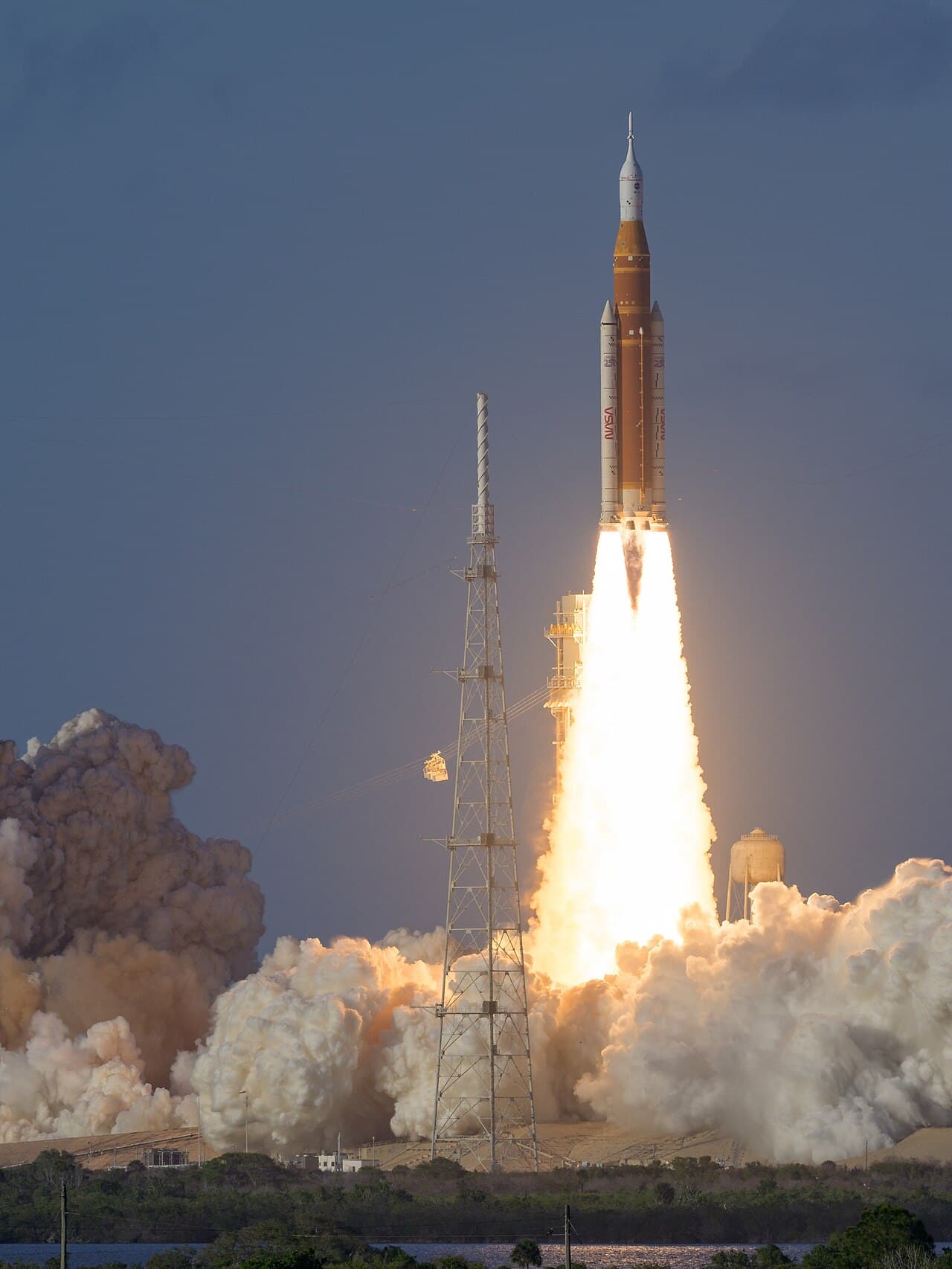
NASA's Artemis II mission launched from Kennedy Space Center on April 1, 2026, marking the first crewed mission to the Moon in more than 50 years. The historic flight carries astronauts Reid Wiseman, Victor Glover, Christina Koch, and Canadian Space Agency astronaut Jeremy Hansen on a ten-day flyby around the Moon.
The mission represents several firsts: Victor Glover becomes the first person of color, Christina Koch the first woman, and Jeremy Hansen the first non-American to travel around the Moon. The crew launched aboard the Space Launch System rocket and Orion spacecraft, which performed a successful translunar injection burn to begin the journey to the Moon.
By Flight Day 5, the crew had moved past the halfway point to the Moon and conducted demonstrations of their spacesuits while preparing for the lunar flyby. The astronauts captured stunning photographs of Earth from deep space, shared widely by NASA and major news outlets, rekindling public excitement about human space exploration.
During the planned multi-hour lunar flyby on April 6, the astronauts will photograph and observe areas of the Moon's surface, becoming the first people to lay eyes on some regions of the far side. The crew is expected to break the distance record set by Apollo 13.
Following the lunar flyby, the astronauts will return to Earth and splash down in the Pacific Ocean. The mission paves the way for Artemis III, which aims to land the first woman and first person of color on the lunar surface, and eventually establish a sustained human presence on the Moon.
The successful launch has been celebrated worldwide as a milestone in humanity's return to deep space exploration, inspiring a new generation of scientists and engineers.