
The Sky in Van Gogh's The Starry Night Matches the Real Pre-Dawn Sky of July 1889, Study Suggests
A study in Scientific Reports argues that the stars in The Starry Night match the Hyades cluster, alongside Venus and a waning crescent Moon, as seen from Saint-Rémy before dawn around 22 July 1889, suggesting the painting drew on real observation.
CultureGNGV Editorial Team4 min readLast reviewed October 26, 2026
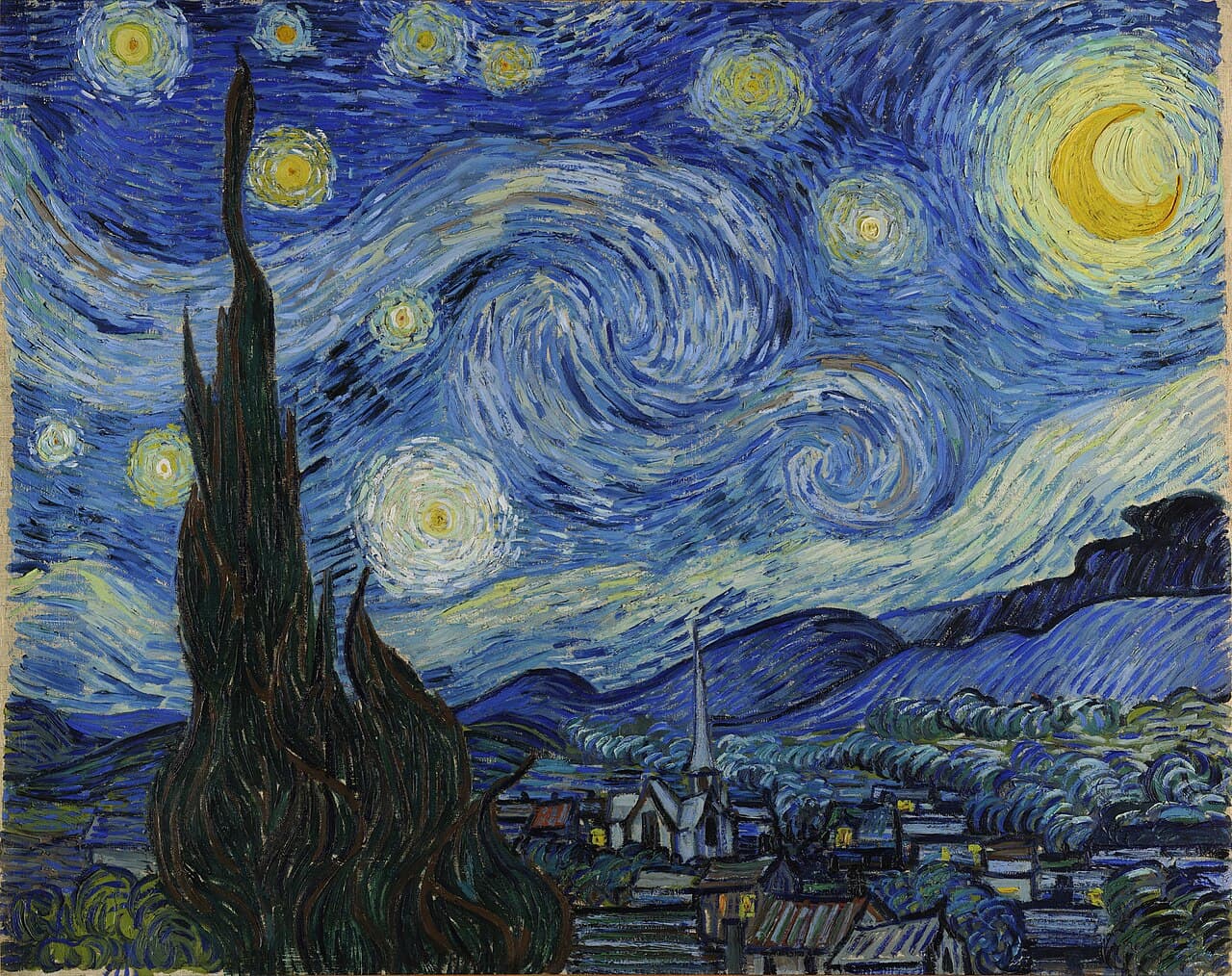
Few paintings are as familiar as Vincent van Gogh's The Starry Night, with its swirling sky over the village of Saint-Rémy. A new study suggests that sky may be closer to reality than many people assumed. Researchers report in Scientific Reports that the stars, planet and Moon in the painting match the pre-dawn sky over Saint-Rémy around 22 July 1889.
The work was carried out by the South Korean space-science company SLLAB and the School of Space Research at Kyung Hee University, with Elijah Jeong-hyun Kim, SLLAB's chief executive and a doctoral candidate at Kyung Hee, as first author, alongside Suna Kang, Jungwoo Song and Ho Jin. The painting has usually been dated from a letter Van Gogh wrote to his brother Theo around 18 June 1889, but the team points out that the Moon at that time was a waning gibbous, which cannot explain the thin crescent on the canvas.
Around 22 July, by contrast, a waning crescent Moon, Venus and the Hyades star cluster in Taurus rose close together in the eastern sky before dawn. Using a statistical technique called Procrustes shape analysis, the researchers compared the five central stars in the painting with the Hyades and found a close match, even closer in a pen drawing Van Gogh made after the painting. "To an observational astronomer, the cluster of stars in The Starry Night is the Hyades in Taurus," Kim said.
The project grew out of two field trips to France in 2019. In Arles, the team used on-site photographs to check Van Gogh's viewpoint for Starry Night over the Rhône, and in Saint-Rémy it located where he drew the landscape beneath the painting. By cross-checking the original French and Dutch letters with weather records and references to cicadas, the researchers also propose that a seizure Van Gogh suffered began in late July. Applying the same method, they suggest the stars in Café Terrace at Night may be the Summer Triangle.
As with any reinterpretation of a much-studied masterpiece, the conclusions are a proposal, not the final word: earlier astronomical readings in the 1980s reached conflicting results, and the authors disclose that SLLAB may benefit commercially from the work. Their code and data are openly available. "Our conversation with Van Gogh's other skies is still ongoing," Kim said, an invitation to look at familiar paintings with fresh eyes.
Why it matters
It shows how astronomy, history and art can work together to shed new light on how one of the world's best-loved paintings was made.
Sources
What you can do
Look east before dawn on a clear night to spot the Hyades in Taurus yourself, and read the study in Scientific Reports.