
Lumina Simulation Recreates the Universe’s First Two Billion Years to Test Webb’s Discoveries
Astronomers at the Center for Astrophysics | Harvard & Smithsonian have built Lumina, described as the largest cosmological radiation-hydrodynamics simulation ever produced. Run on more than 15,000 GPUs of the Frontier supercomputer, it models the cosmos’s first two billion years and will be compared with observations from the James Webb and Roman space telescopes.
ScienceGNGV Editorial Team3 min readLast reviewed November 9, 2026
Since the James Webb Space Telescope began peering into the early universe, astronomers have been finding galaxies and black holes that challenge their expectations. To make sense of those observations, scientists need detailed predictions of what the young cosmos should look like. A team at the Center for Astrophysics | Harvard & Smithsonian has now built one of the most ambitious tools yet for that job: a computer model called Lumina, which recreates the universe’s first two billion years after the Big Bang.
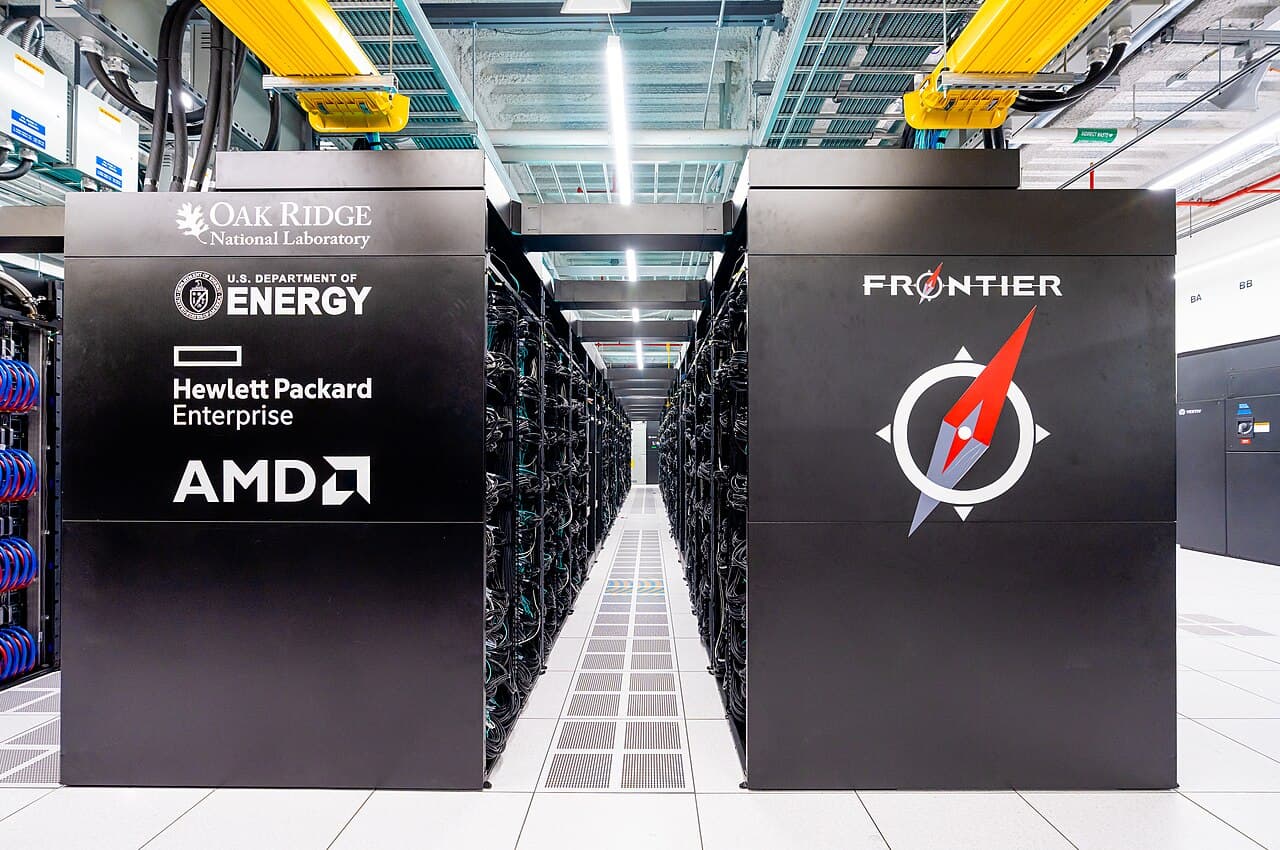
According to the Smithsonian release published on ScienceDaily on 27 October 2026, Lumina is the largest cosmological radiation-hydrodynamics simulation ever produced. It follows how ordinary matter, dark matter and radiation interact to form the first stars, galaxies and black holes. The virtual universe is a cube about 1.5 billion light-years on each side, covering a volume more than 100 times larger than earlier comparable projects. To run it, the team used more than 15,000 GPUs on Frontier, the supercomputer at Oak Ridge National Laboratory in Tennessee. The work is described in a paper in the Monthly Notices of the Royal Astronomical Society led by Oliver Zier, an ITC Fellow at the Center for Astrophysics.
One notable advance is helium reionization, the process in which radiation stripped electrons from helium atoms. The release says Lumina is the first simulation of its kind to follow that transformation while also accounting for its effects on the surrounding universe. “For the first time, we can follow along as both hydrogen and helium changed into their modern form,” said co-author Aaron Smith of the University of Texas at Dallas. “With JWST, the early universe has become an exciting new frontier in astrophysics,” Zier added, noting that “we need to translate our theories into detailed predictions.”
Lumina is a tool rather than a discovery in itself: its results are predictions from the team’s physical model, and comparing them with real data is future work. The researchers plan to use it to study gas moving between galaxies, the influence of leftover Big Bang radiation and regions of unusually intense star formation. Where its predictions disagree with what Webb and the upcoming Nancy Grace Roman Space Telescope observe, astronomers will learn exactly where current theories need refining.
Why it matters
Detailed simulations like Lumina turn new telescope images into tests of physics, helping astronomers find out where their understanding of the early universe holds and where it breaks down.
Sources
What you can do
Read the full release on ScienceDaily, and explore NASA’s free public Webb image galleries to see the early galaxies Lumina is designed to help explain.