

NASA's Roman Space Telescope Switches On Its 300-Megapixel Camera in Space
Weeks after launch, NASA's Nancy Grace Roman Space Telescope has powered up its Wide Field Instrument, a 300-megapixel infrared camera, and completed first checks of its planet-hunting coronagraph. First science images are expected in early 2027.
ScienceGNGV Editorial Team5 min read
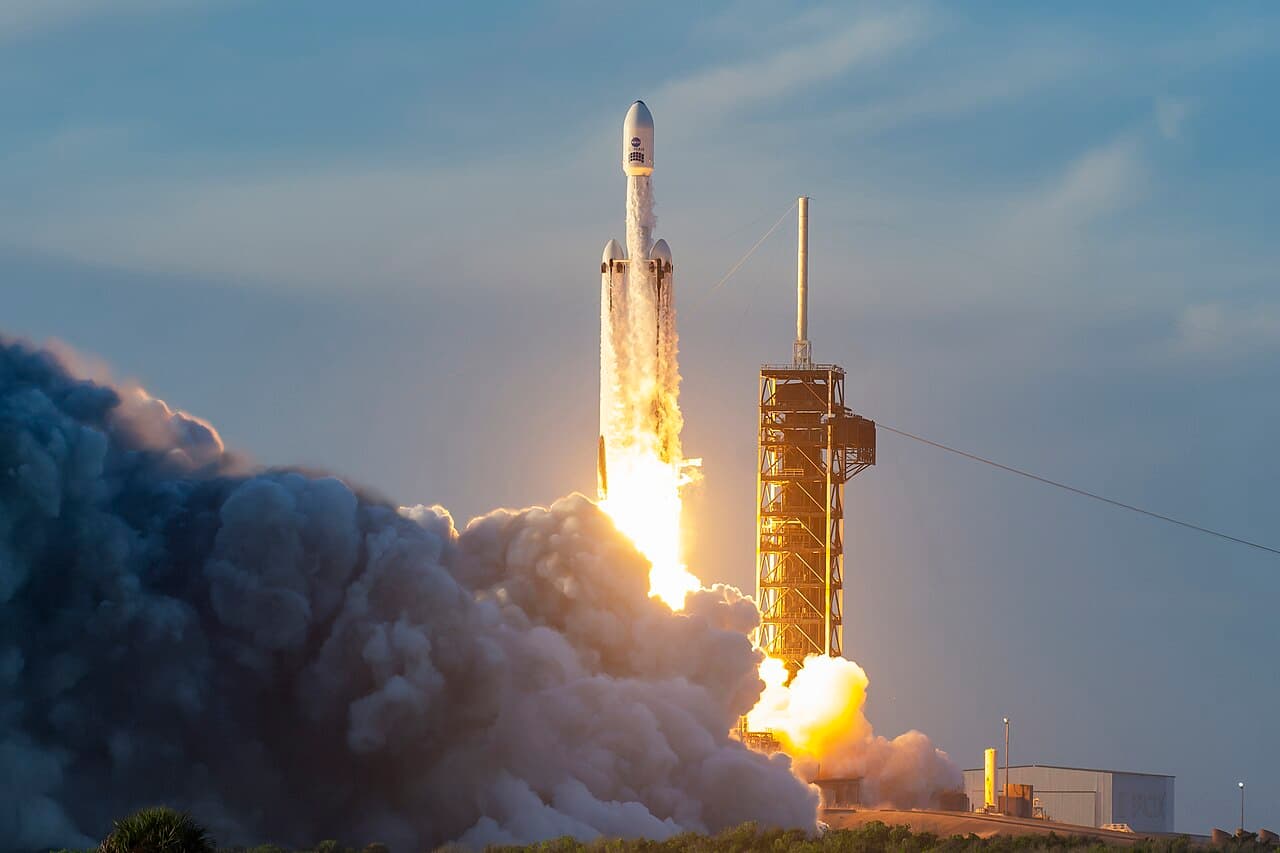
NASA's newest flagship observatory has opened its main eye. In a mission update published on September 15, 2026, the agency reported that the team behind the Nancy Grace Roman Space Telescope had successfully activated the Wide Field Instrument, a 300-megapixel infrared camera designed to survey enormous stretches of the sky. Roman launched at the end of August and is still on its way to its working orbit around the second Lagrange point, about a million miles (1.5 million kilometres) from Earth.
The switch-on unfolded step by step. After a 10-day decontamination period, the instrument began cooling on September 11. Engineers then activated its calibration system and started receiving test data, checked the element wheel that swaps filters in zero gravity, and on the morning of September 13 confirmed that the focus mechanism works. The camera's 18 infrared detectors together cover an area roughly the size of a laptop screen and will eventually operate at about minus 300 degrees Fahrenheit (minus 183 degrees Celsius).
“After years of effort to build and test the instrument on the ground, we now have confirmation that it is operational in space,” said Josh Schlieder, a Wide Field Instrument scientist at NASA's Goddard Space Flight Center. Each Roman image will capture a patch of sky larger than the apparent size of the full Moon, with sharpness comparable to the Hubble Space Telescope.
Roman's second instrument, the Coronagraph, also passed its first mechanical and electronic tests. It is designed to block starlight so that faint planets beside a star can be seen. The team is now keeping its detectors warm for about 30 days so that water or trace chemicals clinging to surfaces can drift away. “Now that this test is complete, we've been decontaminating,” explained Eric Cady, an optical engineer at NASA's Jet Propulsion Laboratory.
There is still work ahead: activating the fine-guidance system, aligning and focusing the optics, and months of calibration. NASA expects the first science images in early 2027. But a working camera in space is the milestone every mission waits for, and it brings Roman's surveys of dark energy, galaxies and distant worlds a clear step closer.
Why it matters
Roman is built to map huge areas of the sky quickly, which should help astronomers study dark energy and find thousands of distant planets; a working camera is the key step toward that science.
Sources
What you can do
Follow the mission's progress on NASA's Roman blog, where the team posts each commissioning milestone.


