

Princeton's PACMAN AI Steers Fusion Plasma in Milliseconds, Heading Off Instabilities Before They Start
In five experiments on the DIII-D tokamak in San Diego, a modular AI framework from Princeton predicted a damaging plasma instability about 200 milliseconds in advance and made control decisions in around 20 milliseconds, with humans still setting its goals and hardware safety limits in place.
Artificial IntelligenceGNGV Editorial Team5 min read
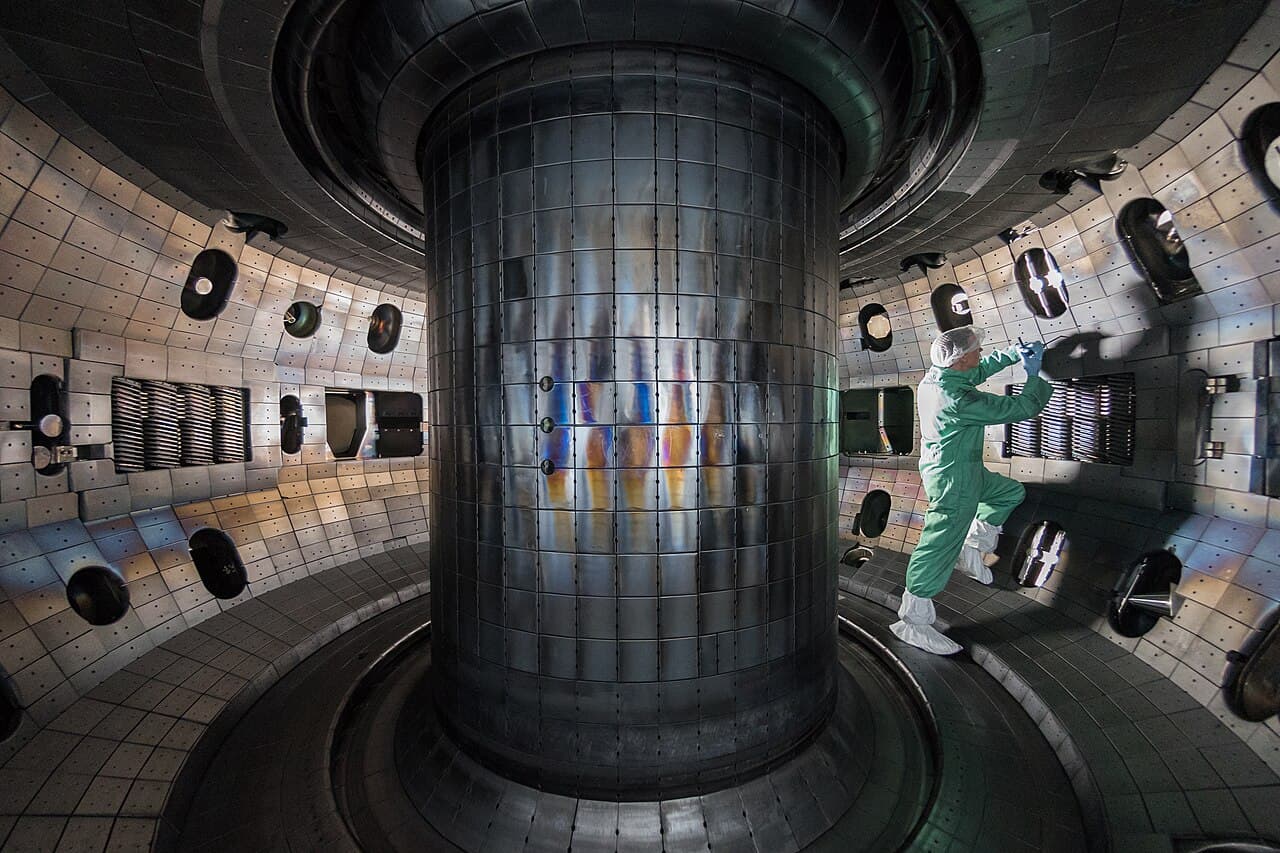
Keeping a fusion plasma stable is like balancing something far hotter than the Sun inside a magnetic bottle, where trouble can build in a fraction of a second. Researchers at Princeton University and the US Department of Energy's Princeton Plasma Physics Laboratory (PPPL) have shown that artificial intelligence can help with that balancing act faster than any human could. Their results were published in the journal Nuclear Fusion and highlighted in September 2026.
The team built a software framework called PACMAN, short for Prediction And Control using MAchiNe learning, and tested it in five experiments at the DIII-D National Fusion Facility, a tokamak in San Diego. The full cycle of collecting data, checking it for errors, predicting what the plasma will do and sending commands within safety limits typically runs in about 20 milliseconds, and then repeats continuously. “A really focused human operator can respond on the order of seconds,” said Andy Rothstein, one of the lead researchers.
In the experiments, PACMAN coordinated multiple heating systems, including six microwave gyrotrons, and handled several tasks. Most notably, a machine learning model predicted a tearing mode, a damaging instability, about 200 milliseconds before it appeared, and the system acted to prevent it. Conventional controllers typically detect a tearing mode only after it has started and then try to suppress it, often at a cost in performance, explained Hiro Farre Kaga, the other lead researcher.
The framework is designed to be modular. “You can add a new one, swap one out or run several at once without touching the rest of the system,” said Egemen Kolemen, an associate professor at Princeton who supervised the work. That flexibility could let it be adapted to other fusion machines, including ones not yet designed.
Importantly, the AI does not run the show alone. Hardware safety limits apply regardless of what it recommends, human physicists review the results after each experiment, and researchers set the objectives. “No matter how sophisticated your controllers, in the end it's a human operator that sets the parameters for that control,” Farre Kaga said. Fusion power is still years away, but tools that help keep plasmas steady are an important step on that road.
Why it matters
Preventing plasma instabilities before they start is one of the hard problems on the road to practical fusion energy, and this shows AI can help while humans stay in charge.
Sources
What you can do
Read the full research summary at the source to learn how the framework was tested and what comes next.


