

Machine Learning Screened 50 Million Compounds to Find Scents That Safely Keep Honey Bees Away From Pesticides
Scientists at the University of California, Riverside trained a machine learning model on bee behaviour and odour chemistry, found about 130 candidate repellents, and showed in field tests that seven of them reliably kept foraging honey bees away without harming them.
Artificial IntelligenceGNGV Editorial Team4 min readLast reviewed September 28, 2026
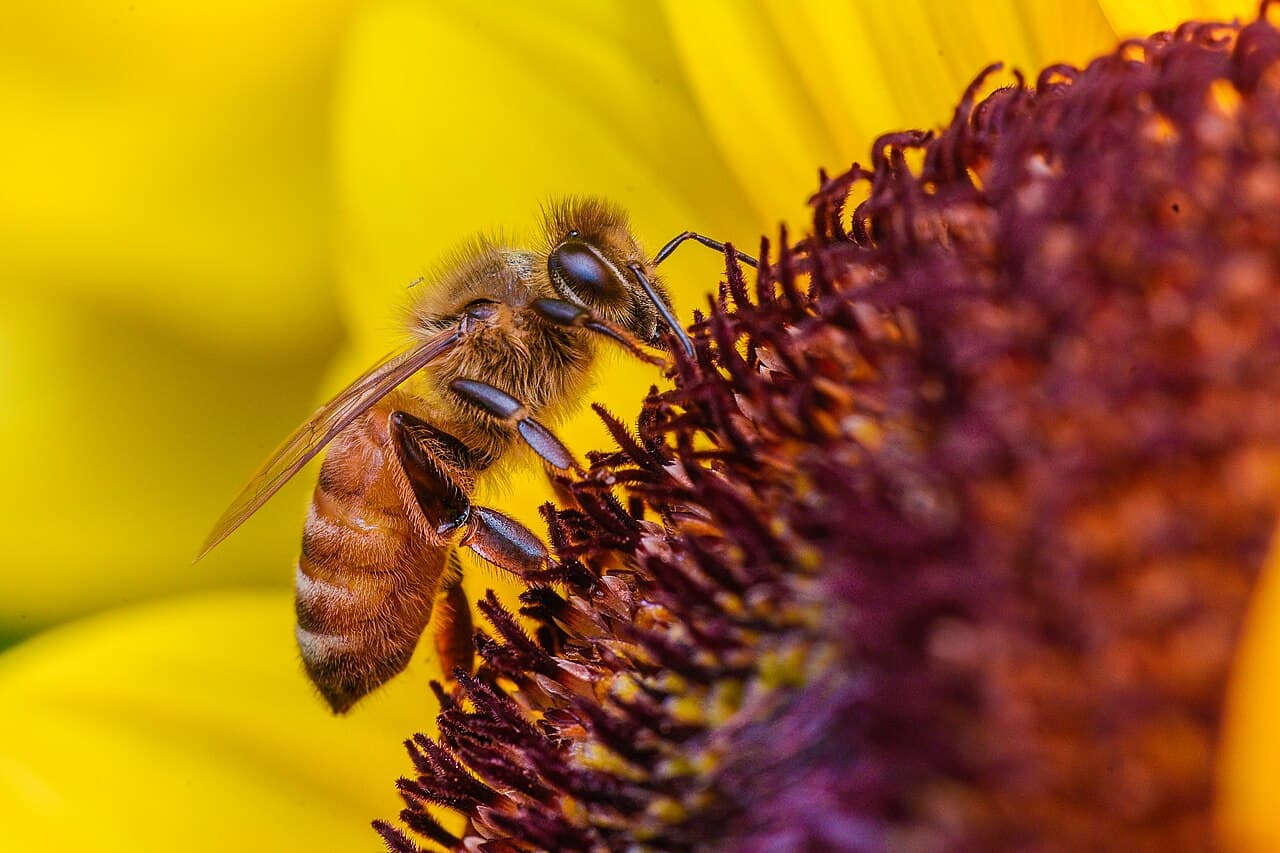
Honey bees pollinate many of the crops we eat, but on farms they can fly straight into fields sprayed with pesticides that harm them. Researchers at the University of California, Riverside have used machine learning to find a gentler way to protect them: scents that bees simply prefer to avoid.
The study, published in the journal eLife in September 2026, was led by Anandasankar Ray, a professor of molecular, cell and systems biology, together with entomology professor Boris Baer. Honey bees rely heavily on smell to find flowers, and their olfactory system contains more than 200 odour receptors. Many previous efforts used scent to attract insects. “Our goal was to flip that script and find a way to use scent as a deterrent — safely and effectively,” Ray said.
The team trained a machine learning model on two kinds of information: the chemical structures of odour molecules and previously recorded behavioural responses of honey bees and fruit flies. The model was refined repeatedly with new laboratory data. It then screened more than 50 million compounds and identified about 130 potential bee repellents. Laboratory tests confirmed that bees avoided the predicted compounds, and seven of the top candidates were taken into field experiments with freely foraging bees. All seven reliably repelled the bees without harming them.
The researchers see several possible uses. Applied alongside pesticides, the compounds could reduce bees' exposure on treated crops. They might also help keep bees from building hives in hospitals, offices and homes, or help manage pollination in the production of seedless fruit.
This is still early-stage research, and more work will be needed to test the compounds on real farms and confirm their safety for people and the environment. The work was funded by the California Research Alliance by BASF, and several of the scientists are named inventors on a pending patent; Ray has founded and holds equity in the company Sensorygen. Even so, it is a clear example of AI being used to narrow a vast search to a handful of practical answers, in this case for one of the most important insects on Earth.
Why it matters
Pesticide exposure is one of the pressures on honey bees; a safe way to steer them away from treated crops could protect pollinators without leaving crops unprotected.
Sources
What you can do
Plant bee-friendly flowers and avoid spraying pesticides on plants in bloom in your garden; read more about the study at the source.