New Zealand's Giant Wētāpunga Bounces Back After 15 Years of Breeding and 11,000 Releases
A new paper documents how zoos, conservation staff, iwi and volunteers saved the wētāpunga, New Zealand's heaviest insect. Over 15 years, about 11,000 captive-bred insects were released at 10 predator-free sites, and the species' status improved from Nationally Endangered to Nationally Increasing.
AnimalsGNGV Editorial Team4 min readLast reviewed October 12, 2026
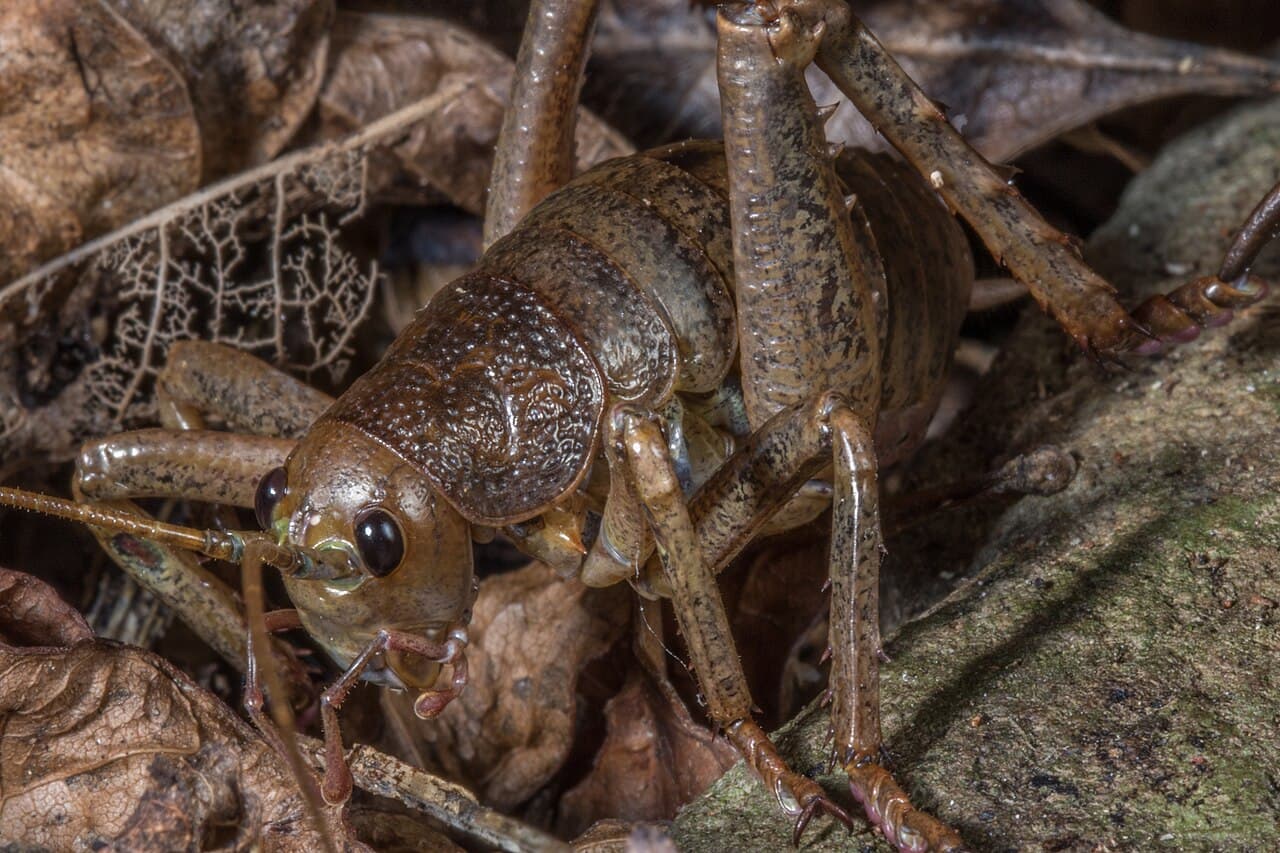
The wētāpunga, or Little Barrier giant wētā, is New Zealand's heaviest insect and the heaviest orthopteran in the world, a group that includes grasshoppers and crickets. Not long ago it was one of the country's most threatened species. A paper published in the New Zealand Journal of Zoology, announced by the Department of Conservation (DOC) on 2 October, now documents how a 15-year effort brought it back.
In the 1990s, DOC's threatened wētā recovery plan identified wētāpunga as among the most at risk. Surveys on Te Hauturu-o-Toi/Little Barrier Island between 2005 and 2009 found the remaining wild population was too small to move animals directly, so the team turned to captive breeding. Butterfly Creek developed early husbandry and release techniques with a founding colony and released wētāpunga onto Motuora and Tiritiri Matangi islands in 2010 and 2011. Auckland Zoo set up a second colony in 2012, refined the methods and scaled up rearing in communal "creches", breeding and releasing 8,874 wētāpunga between 2014 and 2025.
Altogether, tens of thousands were bred and about 11,000 were released through 45 translocations to 10 new sites: eight predator-free islands in the Hauraki Gulf and Bay of Islands and two fenced mainland sanctuaries. On Motuora and Tiritiri Matangi, monitoring has documented at least four generations born in the wild, which is internationally recognised as confirmation that a population has established. The species' conservation status improved from Threatened – Nationally Endangered in 2004 to Threatened – Nationally Increasing in 2022.
The programme was a partnership. Ngāti Manuhiri, the iwi who are kaitiaki (guardians) of wētāpunga and mana whenua of the island where the founders came from, regard the species as a taonga, or treasure, and community restoration groups across the upper North Island raised funds and helped with releases and monitoring. "The future of wētāpunga is looking bright," said Chris Green, a DOC honorary research associate and the paper's lead author.
The lessons are already spreading: they are informing the breeding of Māhoenui giant wētā at the Ōtorohanga Kiwi House, and could help other threatened invertebrates such as the Canterbury knobbled weevil and several native stag beetles.
Why it matters
Insects rarely get dedicated recovery programmes, so this documented success offers a tested blueprint for saving other threatened invertebrates.
Sources
What you can do
If you visit New Zealand, see wētāpunga at Auckland Zoo or Butterfly Creek, or join a local island restoration group; read the full announcement on the DOC website.